This is Faith in Play #102: Teamwork, for May 2026.
Hector Miraz’ Faith and Fandom: Level Three had a guest essay by someone named Harrison Brown which was about working together, teamwork, and it got me thinking in this direction.
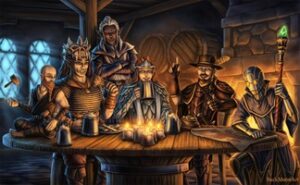
One of the challenges faced by game referees is making sure that all the players have the opportunity to contribute, to be involved in the success of the adventure. This is sometimes called spotlight time or screen time, but it’s essentially making sure that there is something in the scenario that requires the efforts of each character.
In early Dungeons & Dragons™ games this was largely achieved by creating classes with unique abilities: only fighters could stand in the front lines or fire potent missile attacks, only thieves could open locks and disarm traps, only magic-users could use potent spells, only clerics could heal injuries and dispel undead. This meant that with a bit of attention to scenario design, the referee could ensure that each player’s character was needed for the success of the mission.
There is a problem with this approach: it boils down to taking turns. That is, when we need to check for traps, the spotlight is on the thief, and that player is effectively playing solo for a brief time while everyone else waits to get back in the action. Of course, there is a degree to which role playing games always involve taking turns, as even in combat we move from the actions of one character to the next–but when we give one character an extended moment in the spotlight, we shut out the other players.
This isn’t completely bad. After all, if the situation is well written the other players are not only eager to get into the action, they’re eager to find out how the current situation resolves. Does the thief find a trap, and does he disarm it, or does he trigger it, injuring himself and possibly others? Can the cleric save the life of the fallen comrade? Will the wizard’s magic solve the present problem? Not being part of the action doesn’t mean you’re not part of the story; it only means the spotlight has shifted. Still, sometimes we can do better.
The more difficult scenario to design is the one that requires teamwork, where the skills of several, hopefully all, the characters are called upon to work together to solve the problem. This is why combat is a popular aspect of many games: it might rely heavily on the fighters, but the magic-users, the clerics, even the thieves participate. Developing situations in which everyone can be involved is a challenge, but one worth pursuing.
The problem becomes more complicated in games that don’t have classes. The referee has to understand the abilities of all the characters, and work out how to integrate them into a cooperative effort. But forcing the players to work as a team not only enhances gameplay, it builds relationships.
Building relationships is a critical aspect of reaching people with the truth.